Some people, I think, have good garden years, where it’s an all-around “bumper crop.”
We’ve never had that, being utter amateurs. So when we hear skilled growers lament 2015 as a tough year… we think, “Well, at least we’re not the only ones!” The incredible amount of rain we received, combined with cool temperatures that reached even into late-June and early July, doomed many of our crops.
So here are my notes from this year’s garden. And here’s hoping for a bumper crop next year!
2015 GARDEN NOTES
Overall Weather Observations: Heavy rain from May through July, with significant flooding in local areas. A cool season that lasted abnormally long — through June. Then in August, God turned off the faucet. Late August and basically all of September (and so far, October) saw rainfall levels well below average. I hadn’t set up our irrigation system very well for the garden, so it suffered a bit as a result.
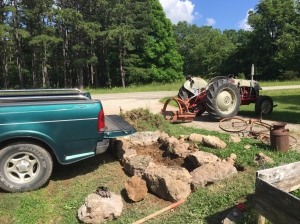
Methodology: We used the “wood chip” method again, having piled very fresh wood chips in November/December, and then spreading them across the garden in early March. For Saylor’s small garden as well as in a new bed I built in the front of the house, we used mainly rich topsoil from the corral, in a semi-raised-bed that was dug loosely and not ever walked on. The wood chips really seemed to stunt or slow everything’s growth. I think it’s because we put a lot down, and they were very fresh, and so the young plants stretching their roots didn’t find the quantity of easy nutrients they needed. They plunged their root systems among and even through the middle of the wood chips, but I think the soil just wasn’t rich enough. Eventually they grew to a mostly-normal size (though I think still small for some), but it took a long time. Also, the wood chips tend to be a great place for bugs to hide — squash bugs/stinkbugs/cucumber beetles in particular. We’ll use this method again next year (because I don’t want to clear all the wood chips out of the garden), but we won’t add any fresh wood chips. Instead, I’ll add plenty of rich manure and compost, and hope that the organic matter will break down throughout the fall, winter, and early spring so that next year’s plants have a better chance.
Seeds: We got all our seeds, of course, from Baker Creek Heirloom Seed Company. The best.
Best Crops
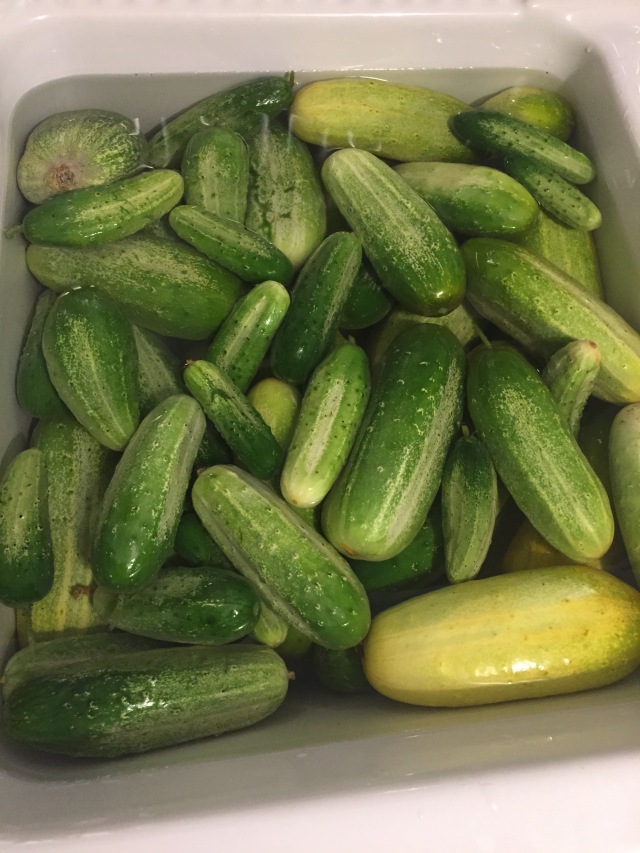
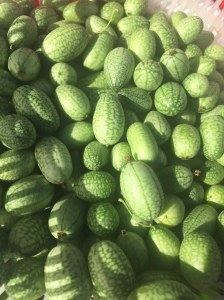
Cucumbers — The Delikatesse Cucumbers along our garden fence did mediocre, but I think it was because they got hit early by bugs and I didn’t tend them well. The soil was also not amended well and not very loose. They did produce some cucumbers, but I didn’t like the shape—they tend to be very roundish—and they really didn’t do well. Suddenly the plants just dried up and died. But a late planting (I think early June) of our new favorite variety did well. We sowed National Pickling Cucumbers in my new bed at the front of the house. Full sun. Very rich soil. They were trellised on an old rusty bicycle I found in the barn. They performed amazingly! Tons and tons of cucumbers. The only problem was that after a fairly short productive stretch, they very quickly died! Various sections of the vine would begin withering, and then the whole plant was soon dead. I’m not sure if it just died of “old age” or if we had a bug problem. Well, I know we had a bug problem, but I didn’t really see very many, so I’m not sure. Either way, we had fantastic productivity from these cucumbers, and we made TONS of pickles! We’ll post about that soon. Next year, we plan to use those again, and also want to grow some Mexican Sour Gherkins. One of our farmers market growers had them, and she said they grew easily—some even were volunteers from the previous season!—and they tasted delightful. Almost like they were already pickles — tart. Perfect for pickling and then using as a snack or hors d’oeuvres!
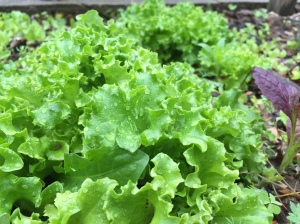
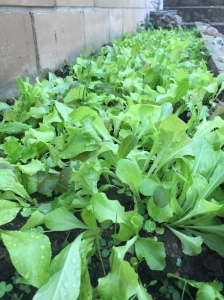
Lettuce — The lettuce had a crazy-long growing season because of the extended coolness, and we eventually got tired of salad! We did a good job of successively planting, sowing the first round in the bed that gets full sun in the early spring, and another round in the bed that gets some afternoon shade in May/June, to keep them from bolting. Our fall lettuce garden is coming on strong, having been planted in early September. The warm temperatures help it germinate and grow well, but it’ll stay cool for them as they mature so they won’t bolt. The Rocky Mount lettuce mix grown against the north side of the house gets zero direct sun this time of year (that bed only gets direct sun from mid May through mid August), but the lettuce still seems to be doing quite well. The soil there stays nice and moist as a result.
Spinach — Same as the lettuce. Successive planting with an eye toward what will get afternoon shade in May/June is crucial. But our last planting of spinach was in early June, and even though that bed gets a good amount of shade and is on the north face of the house, even the mildly hot days of June/July made it bolt fast. We’ll give up on hoping for any summer lettuce in the future, and it’ll just be a spring and fall crop. Also — very cool! — we accidentally overwintered some spinach, and it was producing nice, big leaves for us in very early spring. We’ll try that again, too. It was a typically cold winter, though not much snow. The bed did have a little bit of leaf cover in it, so that might have provided some insulation.
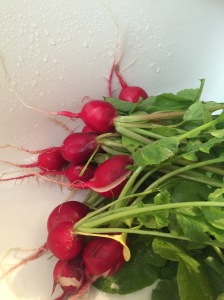
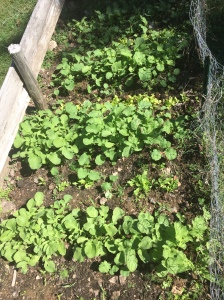
Radishes — We didn’t try these in the spring, but our fall radishes have been fantastic! We sowed them in late August/early September, after pulling up the lettuce/kale bed (which was looking horrible and had all bolted). We turned over the soil, and amended it with some fresh compost we’d been cooking over the summer—which consisted mainly of hay/straw and manure from the corral. (More on that below.) The compost really seemed to make a difference. Everything in those beds has done incredibly well so far. We didn’t use the wood-chip method in those beds. We successively planted the radishes. We did thin the rows somewhat, but once some of the radishes start forming nice bulbs, the picking is the thinning — and it seems like the ones that get crowded early still tend to make bulbs once they’re un-crowded (when we pull the early bulbs near them).
Carrots — The jury is still out on these, as they’re still very small and growing as I type this. But they came up well, and probably need to be thinned a bit. They were only planted in the fall, in between the rows of radishes — so, in the loose, amended soil. So far, so good.
Cilantro — It like full sun but cool temps. So this spring and summer worked really well for it. It can handle partial sun, but grows slower. It did eventually bolt in the summer and we collected seeds. We have a good fall crop coming on now.
Parsley — Our parsley has been hanging out in the western part of our lettuce/spinach beds, and it’s just thrived all summer. It never bolted, and is still going strong!
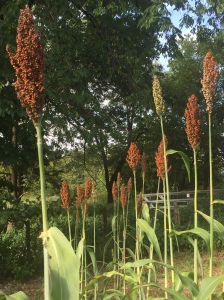
Sorghum — The Mennonite Sorghum came on slow — likely due to the rain and coolness — but eventually got big and strong. They ended up about 7–8 feet tall, with some putting on multiple seed heads. They’re beautiful at the summer’s end, with brownish-red spires of grain that the cardinals nibble on until we cut them off. They grew in the main garden amid the wood chips, and that might have slowed their growth somewhat.
Kale — We did seed kale, but I think some of it also came from plants that bolted last year and reseeded themselves. The kale just thrives in the front beds where the lettuce and some herbs are. It does bolt, but we just let it go, and left that bed alone in the summer, and then when we pulled it all up and tilled it in late summer for the fall garden, tons of kale (and dill! and some cilantro!) came up among the radishes and carrots. And the fall kale is doing even better than the spring kale. One thing we did discover is that the _____ beetles along with the little green worms that go after the broccoli both did a number on our kale, particularly the head-forming kind. They stripped it clean. But thankfully, it was a big stalk, had a good root system, and after we smashed dozens of bugs and eradicated most of them, the big stalks started sprouting new little leaves all along them.
Collard Greens — We only are growing these as a fall crop. They do horribly in the wood chip garden. But they thrive in the rich soil beds.
Turnips — Same as the collard greens. So far, so good, although they’ve not produced turnip bulbs yet: they’re growing strong and fast!
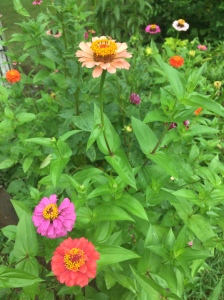
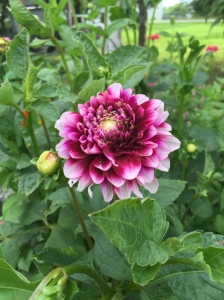


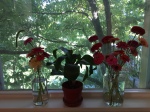
Zinnias & Other Flowers — We sprinkled some zinnia seeds in a little cleared patch of dirt right next to the peonies (which perform beautifully every year!) and among a few dahlia bulbs. I accidentally pulled a few out, because I forgot I had planted them, and I was weeding around the emerging dahlias. But the zinnias exploded! They produced all summer long, and are still producing, and we’ve had beautiful flowers in the house all summer! We’ll plant those every year, for sure.
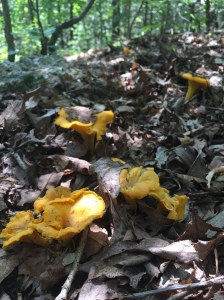
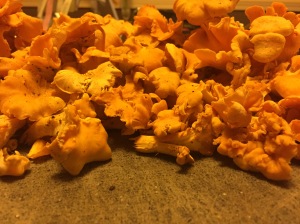
Mushrooms — We found the motherlode of chanterelles, scattered across the wooded hillsides. I think they were brought on by all the heavy, consistent rains. Among them we found a few edible boletes too. They were brought home (in all their lovely smelling glory), cleaned, cut up, dried, and bagged, and they’re ready for fall and winter soups!
Mediocre Crops
Peppers — Bell peppers of various varieties along with poblanos all did decently. We started them early, indoors. Germination was predictably low and slow. And they took forever to grow, but I really think the wood chips are to blame for that. We got almost zero peppers until August. Even then, the peppers have been smallish. But, they’re pretty, they’re crisp and tasty, and they seem to be producing fairly well into the fall, so hopefully some peppers will garnish our fall salads!
Peas — We didn’t plant these in the spring, because we have a really hard time getting them to germinate early enough to where they’ll mature before we get an early heat blast in May and it ruins them. But our fall peas are showing promise. The plants are growing nicely, but they’re still too young to produce. We planted them in early/mid September. A little earlier might have been ideal, but we’ll see.
Strawberries — Really, we got very few strawberries. The ones we did get were small and not very sweet. Our few remaining alpine strawberry vines put out a few sweet ones, but that was it. However, we started a new form of crawling alpine strawberry in the early spring, in seedling trays. They were transplanted in early June, and this fall, it’s obvious they’ve spread around the the strawberry bed significantly! We’ll mulch the bed well this winter. Here’s hoping next spring will be full of alpine strawberry sweetness!
Asparagus — We set our asparagus crowns in the ground early this spring, so we knew we wouldn’t harvest any this year. But they all lived, and put up tiny, skinny stalks, offering the promise of a harvest next spring!
Beans — The bush beans did okay, but never produced much more than one or two pickings. The deer harmed them, as did the cool, wetness, I think. The pole beans grew up our corn stalks, and seemed strong. But then the corn got demolished by raccoons, and that was the end of that.
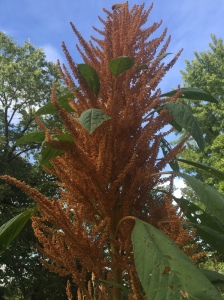
Amaranth — Really, the amaranth did poorly. Except for one plant, which grew about 8 feet tall, and put on a huge head of grain! I hope to grow a good plot of it and sorghum some day, to feed our animals. This was an experiment. I do think the wood chips hurt it, and the coolness and moisture probably did too. But there’s hope that we could master amaranth in the future.
Poor Crops
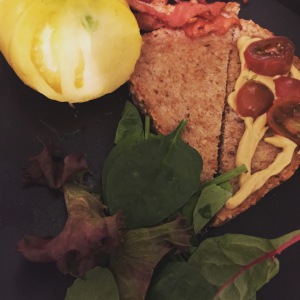
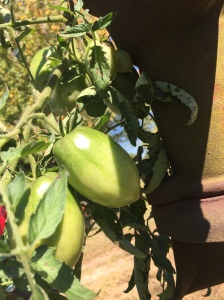
Tomatoes — I mean, the tomatoes were horrible this year. We started them early, and the seedlings showed promise. But the long, cold, wet spring combined with our wood chips stunted them significantly. When they finally began blossoming, they did put on quite a few green tomatoes. But they stayed green. For months. The only tomatoes that showed any interest in ripening were our Chocolate Cherry tomatoes. But even those were pretty weak, and often split when we pulled them off the vine. We did harvest a few, and enjoyed them. One was a white tomato, which was pleasing to the eye and the palate! Also, the deer occasionally visited our garden and very recently stripped the tomato vines clean. And the frequent moisture brought the blight on strong. The only solace we took was that our Amish grower at the farmers market said he had a horrible year for tomatoes too. Of course, he still had some tomatoes, but it was nothing like last year, when he was feeding crates of tomatoes to his pigs. He often sold out this year. Tomatoes are the most alluring thing to garden, and can often be relatively easy to grow. We will, of course, try again next year. With far too many varieties and too much optimism. I can’t help myself.
Okra — A friend who has never gardened asked if I would teach him this year. I told him it was a bad idea, and I was right. I still haven’t figured it out; how can I teach anybody? He wanted to grow okra, and he planted some seeds towards the back of our garden. They came up, and grew a few feet tall eventually. But they were deer food all season long. It got to the point of absurdity: every time the plant would regrow leaves and was probably soon ready to put on flowers, the deer came through and stripped it. I can’t wait for deer season. Anyways, we’ve grown okra successfully here before, and may try again. But I don’t much care for it anyhow: too slimy for my liking.
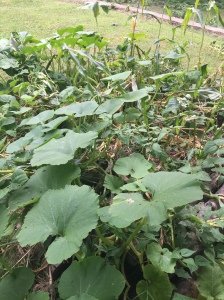
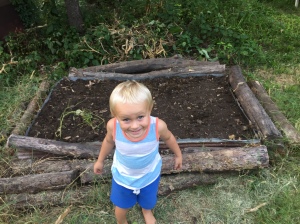
Squash & Zucchini — Horrible, just horrible. Stunted by the wood chips, they grew slowly and with a yellowish hue. Just before the zucchini seemed ready to put out flowers, they all died. I don’t know why. It could have been deer; it could have been squash bugs. But something killed them, and that was the end of it. The squash just performed pitifully. Grew slowly, and never put on a single squash. Now, Saylor’s little garden had some winter squash and gourds growing in it. But the raccoons destroyed them.
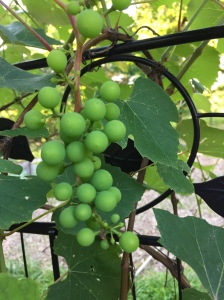
Grapes — I planted my grapevines a couple of years ago along the south fence of our garden. One has been slow to take off, but may do well next year. The other, a pink varietal, was strong last year and I thought this year we might have some grapes. We did. Lots of little bunches developing. But the dreaded black rot ruined them. I learned about black rot as my grapes dropped off the vines — warmth and prolonged moisture will doom a maturing grape. The warmer it gets, the faster the black rot can develop if the grapes stay moist, so it’s crucial to have good airflow among the vines and for them to be growing in full sun. Mine get some afternoon shade from a nearby redbud tree (which isn’t going anywhere!). That combined with the eternal rains of May, June and July, and the predictable Missouri humidity, meant our grapes all got black dots, and then black rot, and then we had no grapes. Better luck next year.
Blueberries — The blueberries never ripened! We have three plants. One is pretty good; a second is mediocre, and a third is just barely there. The mediocre one never turned its blossoms into fruit. And the other two put on fruit, but it never ripened. Then, the fruits vanished. Seriously strange.
Raspberries — These we had high hopes for this year. The bush we had planted two years ago performed strongly last summer and put out lots of new canes, so we thought this year would be great. But most of those canes seemed dead this year, and a lot of the new stuff got eaten by… yep, deer.
Broccoli — These actually still might do something. I started them in February or March, and set them in a place that got afternoon shade. They just grew slowly, and then got attacked by worms (see below). But they were big and strong enough that they lived through the summer—nearly devoid of leaves—and now, in the coolness of the fall, they’re trying to make a comeback. We’ll see if we actually get any edible broccoli from them. Who knows.
Cabbage — I really had hopes for our cabbage. It was in the main garden. It started doing well, but I think the wood chips combined with the flooding really did it in. It amazingly survived the whole summer, despite being eaten nearly to the ground. But I think the late-summer dry spell finally finished our few cabbage plants off.
Pest Problems
Deer — Deer ruined our garden, in many ways. I tried to put up a high fence around the area where I thought they were coming in, but it was no use. Summer is a very busy time for me, so I had no time to rework the entire fence. This winter, I’ll make sure there’s an 8+ foot fence around the entire thing. I have enough fencing material; I just need the time.
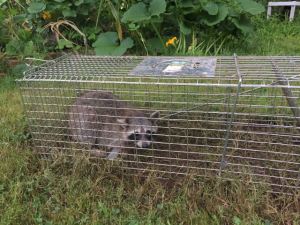
Raccoons — Coons got into the squash and corn. They stripped the ears only days before they were ready to be picked. They trampled and pulled down the stalks. And they munched the winter squash. They also killed a chicken recently. I caught that coon (the chicken killer) in front of the coop with a live trap, the night after she murdered my hen. We caught several others throughout the summer, in front of Saylor’s garden where they’d been wreaking havoc. One night, we got a two-fer. Two in one trap. So the coons hurt us, but we put the hurt on them too.
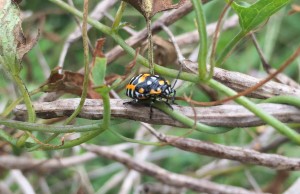
Harlequin Cabbage Bugs — These little devils wreaked havoc on some of our plants. It turns out, they feed on stressed plants, particularly cool-weather plants that are out of their season (in hot weather). Thanks to the Dirt Doctor for that explanation: next year, when our plants like kale, broccoli and other spring crops hit summertime, we’ll toss them in the compost pile! We did find that killing them individually by hand—and we did that at the same time that we cleared out much of what they were feeding on—made a noticeable dent in their population. A couple rounds of that will likely get rid of them. I discovered that one way to make them all show themselves is to hand-water the area where they’re dwelling. They come out to the top of the plant to dry off, and then I can pick them off! They are not poisonous and can be fed to chickens. Which brings me to my next pest…
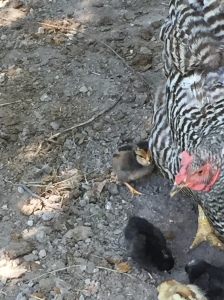
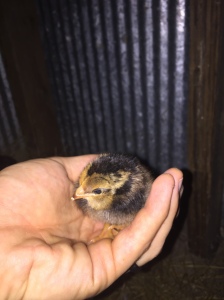
Chickens — They get into the main garden easily, but next year I’ll try to put a stop to that. It’s theoretically possible. They just peck at the greens, and scratch around and hurt the young, tender plants. Also, I found them in one of our front radish/lettuce beds this week, and they had done some damage. I was surprised they were in there, since it’s a small space and is partly enclosed by chicken wire. But it was the one day I hadn’t fed them, too (we were out of feed!) and I have to wonder if they were getting revenge. That said, two of our hens sat on eggs and hatched a total of 9 chicks this summer, so they get a little grace.
Hornworms — They weren’t bad until late-summer, when we found a few on our peppers and tomatoes. But they were nothing compared to several years ago, when we were finding sometimes 10 or more per day.
Little Green Broccoli Worms — I believe they’re Diamondback Worms, and they make short work of our broccoli and other cruciforms. They ruined our head-forming kale along with the cabbage bugs, and really did a number on our broccoli.
Stupid Cat — She decided to use the row of turnips and collards as her personal toilet. So that’s that.
—
That’s it! Of course, we’ll be growing some things indoors throughout the winter: some herbs and lettuce under grow lights we have set up in the basement. And after the new year, we’ll start our 2016 tomatoes and peppers. But for now… here’s to a beautiful fall, a peaceful, snowy winter, and a productive season in 2016!





 The Ozark House